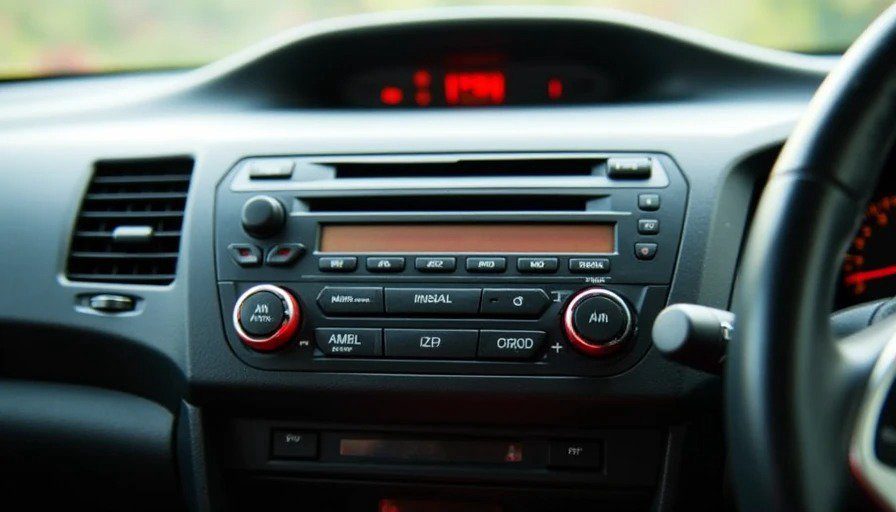
I spent last weekend in my garage with a 2012 Honda Civic and a box of tools. The car belonged to my neighbor, a guy who's been driving it since new. The factory stereo was fine in 2012 — AM/FM, CD player, a tiny monochrome screen, and a USB port that could barely charge a phone. In 2026, it's a museum piece.
He asked me: "Should I spend $600 on a new head unit, or just live with it?"
That's the question millions of drivers are asking. And it's a harder question than it used to be. In 2016, the answer was obvious: aftermarket head units were dramatically better than factory systems. In 2026, factory infotainment has caught up — mostly.
I spent eight years building infotainment systems at Harman. I've installed aftermarket head units in half a dozen cars. And I've tested enough 2026 factory systems to know where the gaps still are.
Here's the honest answer.
The 2026 Aftermarket Landscape: Not Your Father's Car Stereo
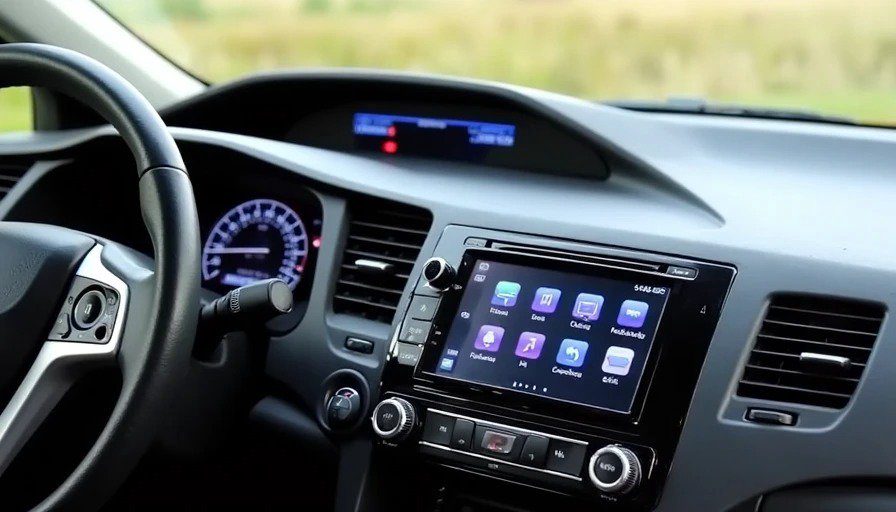
The aftermarket head unit market has changed dramatically in the last five years. Gone are the days when your only options were clunky single-DIN units with tiny screens and confusing menus.
The premium tier has gone spatial. Pioneer's SPHERA, launched at CES 2026, is the world's first aftermarket head unit with Dolby Atmos support in CarPlay. It uses a 10.1-inch HD capacitive touchscreen, wireless CarPlay and Android Auto, and Pioneer's PURE Autotuning system to calibrate sound to your car's specific cabin acoustics. The price? $1,300 — before installation.
The mid-tier is where most buyers land. Brands like Kenwood, Alpine, Sony, and Pioneer offer wireless CarPlay and Android Auto, 6.8- to 7-inch displays, and solid audio tuning tools for $400-$700. The Kenwood eXcelon DMX809S ($500-$600 range) offers 5V preouts, a 13-band EQ, and time alignment — features that used to require separate processors. The Alpine iLX-507 is built around sound-quality-oriented tools like parametric EQ and time correction. The Sony XAV-AX6000 adds 5V preouts, a 14-band EQ, and time alignment.
The budget tier has gotten shockingly good. You can now find double-DIN units with wireless CarPlay and Android Auto for under $150. A $100 Android head unit can transform an aging interior.
The wild card is Android-based head units from brands that run full Android, support wireless CarPlay and Android Auto, and offer OTA updates — something factory systems still struggle with. But they're also more prone to bugs and inconsistent quality.
What Aftermarket Does Better (Still)
1. Sound Quality
This is the biggest gap that still exists. Factory-installed head units are typically built to a strict cost ceiling, featuring low-power amplifiers and basic equalization.
An aftermarket unit's built-in amplifier and DAC can sound just as good as the original stereo, if not better. And with preamp outputs (preouts) in the 4V to 5V range, you're sending a cleaner signal to external amplifiers. A 13-band EQ lets you shape sound with precision that no factory system can match.
2. Wireless Connectivity
Many 2026 factory systems still require a wired connection for CarPlay and Android Auto. Aftermarket units have had wireless for years. Most mid-tier and premium aftermarket units offer seamless wireless integration.
3. Ongoing Software Updates
Factory infotainment systems often receive limited updates — or none at all. Aftermarket Android head units support OTA firmware updates, meaning your system can improve over time. That's not just a convenience — it's a fundamental difference in how the two ecosystems work.
4. App Flexibility
OEM systems prioritize reliability and vehicle integration. Aftermarket Android head units prioritize flexibility, connectivity, and ongoing software capabilities. Want to run Waze, Spotify, and a third-party podcast app simultaneously on the same screen? Aftermarket units let you. Factory systems? Often not.
5. Price
This one cuts both ways, but at the entry level, aftermarket wins. You can get a wireless CarPlay unit for under $150. A factory system with the same features would cost thousands as a new-car option.
Where Factory Has Caught Up
1. Vehicle Integration
This is the one area where factory systems are unbeatable. An aftermarket head unit can't control your climate, heated seats, or vehicle settings without expensive integration modules — and even then, it's not always seamless.
Some aftermarket units support integration modules that retain factory features like steering wheel controls and vehicle settings. But it's an extra cost, and it doesn't work on all vehicles.
2. Display Quality
Factory screens have gotten much better. The 12.3-inch displays in the Hyundai Ioniq 6 and Toyota Camry are crisp, bright, and responsive. Aftermarket units top out at 10.1 inches, and the display quality varies widely.
3. Reliability
Factory systems are tested for automotive conditions — temperature extremes, vibration, long-term durability. Budget aftermarket units? Not so much. The bargain basement specials are a gamble. Even mid-tier units can have quirks like screen glare and UI issues.
The Hidden Cost: Installation
Here's where the $600 question gets complicated.
A $600 head unit is rarely a $600 upgrade. You'll need:
A dash kit ($20-$100) to make the new unit fit your car's dash
A wiring harness ($10-$50) to connect the new unit to your car's electrical system
An antenna adapter ($10-$30) if your car has a factory antenna
A steering wheel control interface ($50-$150) if you want to keep your steering wheel buttons
Professional installation ($100-$150 flat rate, or $75-$125/hour)
A $250-300 stereo can have $100-300 in parts required. A $600 head unit can easily become a $900-$1,000 project.
And that's before you consider vehicles with factory amplifiers, backup cameras, or other OEM quirks that complicate swaps.
The Dad Mode Test: Which One Works Better?
I installed a mid-tier Sony unit in my neighbor's 2012 Civic. Total cost: $550 for the unit, $180 for parts and installation. Total: $730.
Was it worth it?
The good: The Civic went from a museum piece to a modern car. Wireless CarPlay worked flawlessly. The 7-inch screen was bright and responsive. The sound quality was dramatically better than the factory unit — clearer highs, tighter bass, and no distortion at high volume. My neighbor's daughter (who's about Maya's age) could finally watch videos on the screen during long drives.
The not-so-good: The unit doesn't integrate with the car's vehicle settings — no tire pressure display, no door-open warnings. The steering wheel controls needed an extra adapter, and it took two trips to get it working right. And the aesthetic doesn't quite match the factory dash — it looks aftermarket.
The bottom line: For a car that's 10+ years old, an aftermarket head unit is a no-brainer. It transforms the driving experience for a fraction of the cost of a new car. For a car that's 3-5 years old with a decent factory system? The value proposition is much weaker.
The Verdict: Is $600 Worth It?
It depends entirely on your car and your priorities.
Worth it if:
Your car is 8+ years old with a basic or outdated stereo
Sound quality matters to you
You want wireless CarPlay/Android Auto and your factory system doesn't have it
You're willing to deal with installation costs and potential integration quirks
You plan to keep the car for several more years
Not worth it if:
Your factory system already has CarPlay/Android Auto (even wired)
Your car is modern and you're happy with the factory integration
You're not an audio enthusiast
You're leasing or planning to sell the car soon
Maybe worth it if:
Your factory system has CarPlay but it's slow or glitchy
You want a bigger screen
You're willing to spend $800-$1,000 total for a significant upgrade