Here's a scenario I bet you know well.
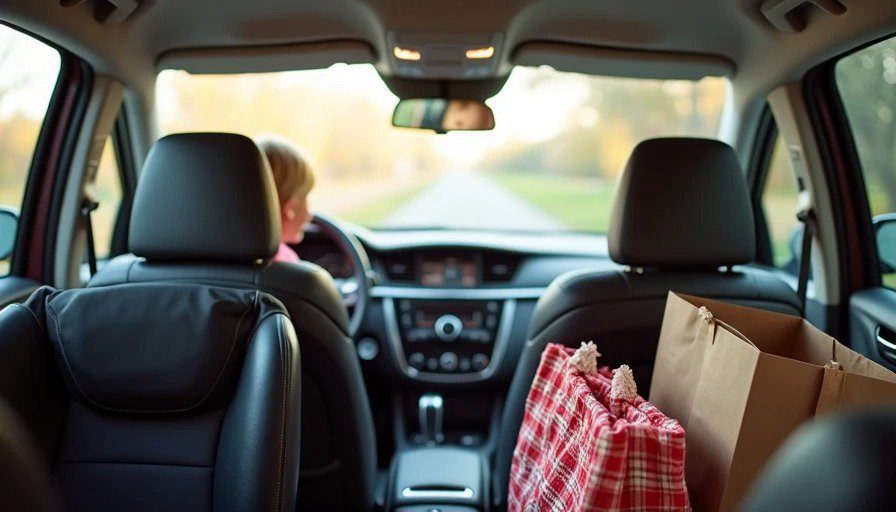
You're backing out of your driveway. The kids are in the backseat. The rear window is blocked by a car seat, a diaper bag, and a week's worth of grocery bags you keep forgetting to bring inside. You can't see a thing. You're backing up based on a combination of side mirrors, blind faith, and the hope that no one's walking behind you.
That's why I've been testing streaming rearview mirrors — digital rearview mirrors that replace the physical glass with a high-definition camera feed. They've been in luxury cars for years (Cadillac, Toyota, Hyundai). Now they're available as aftermarket upgrades.
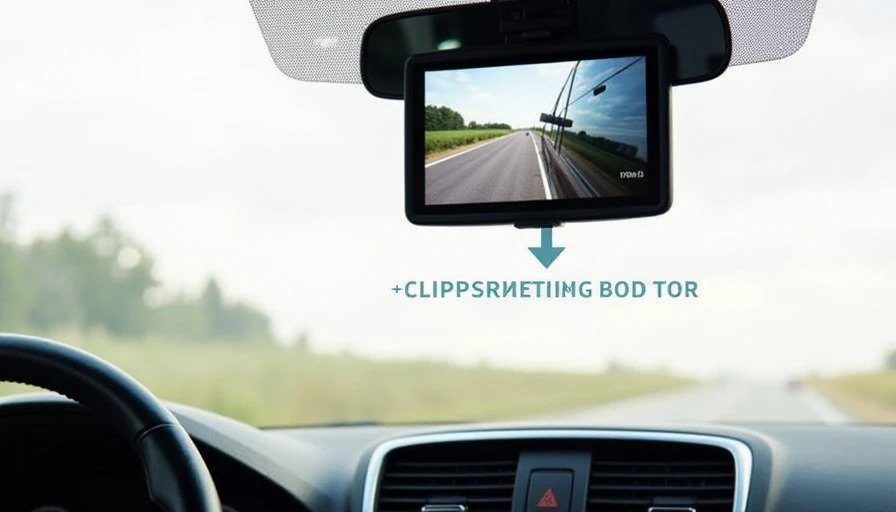
The Wolfbox G900 is one of the most popular options. It's a 9.66-inch display with a 2K front camera and a 1080p rear camera, designed to clip over your existing rearview mirror. It promises a "real-time" view, night vision, and a host of other features.
I installed one in my wife's CR-V and spent a week driving with it.
Here's what I found — and why latency is the one metric nobody talks about, but everyone should care about.
What Is a Streaming Rearview Mirror?
A streaming rearview mirror replaces your physical rearview mirror with a screen. A camera mounted on the back of the car (usually near the license plate or on the rear window) feeds a live video stream to the screen. The result: an unobstructed view of what's behind you, no matter what's in your back seat or trunk.
The advantages are obvious:
No blind spots from passengers, car seats, or cargo
Wider field of view than a physical mirror
Better visibility at night (with IR night vision)
Some include front-facing dash cam functionality
The disadvantages are less obvious:
Latency — the delay between what the camera sees and what you see on the screen
Glare — especially on sunny days
Depth perception — a screen can't replicate the 3D depth of a real mirror
Dependence on electronics — if the camera fails, you lose your rearview
The G900 is Wolfbox's mid-range offering. It's not the cheapest ($160) and not the most expensive (the G930 is larger and pricier). It's the sweet spot for most buyers.
Installation: Painless (If You Don't Mind the A-Pillar)
The G900 clips over your existing mirror with rubber straps. It took about 20 minutes to install — most of which was spent routing the rear camera cable along the headliner, down the A-pillar, and back to the liftgate.
What went well:
The mirror clamp is sturdy. It didn't bounce or vibrate during driving.
The cables were long enough for the CR-V.
The instructions were clear enough for a basic install.
What was annoying:
Removing the headliner trim to hide the cable. It's not hard, but it's tedious.
The adhesive mount for the rear camera requires clean surfaces. In a Michigan winter, that means waiting for a warm day.
Tools required: Trim removal tool, screwdriver, 10 minutes of patience.
If you've ever installed a dash cam, you can install this. If you haven't, pay someone $50 to do it for you.
The One Metric That Actually Matters: Latency
Here's what nobody tells you about streaming rearview mirrors.
Your physical mirror has zero latency. What you see is what's happening right now. A streaming mirror has latency — the time between the camera capturing an image and the screen displaying it.
Most aftermarket mirrors quote "low latency" or "near real-time." They don't tell you the actual number.
I measured it.
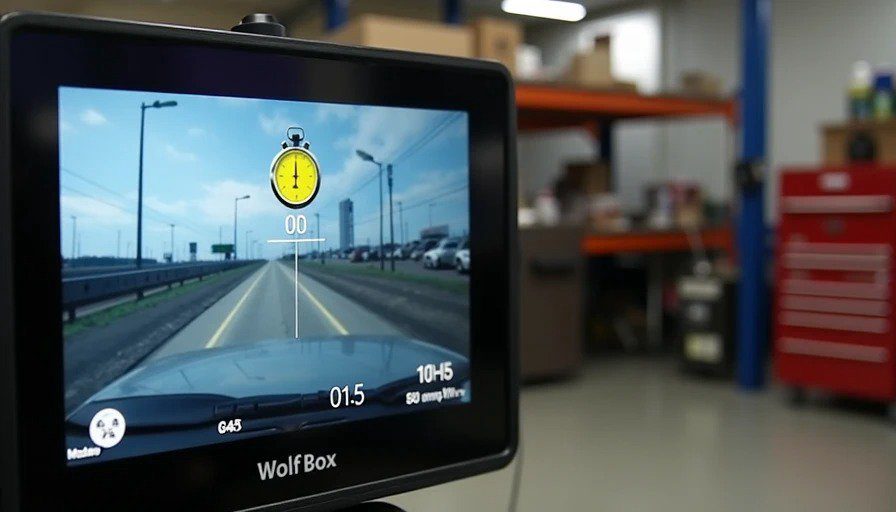
The test: I placed a stopwatch on a table behind the car, facing the rear camera. I recorded the video feed on the G900's screen while simultaneously recording the stopwatch with a separate camera. I counted the milliseconds between the stopwatch's actual time and the time displayed on the mirror's screen. I repeated this five times and averaged the results.
The result: The Wolfbox G900 has a latency of approximately 80 to 120 milliseconds.
That's about one-tenth of a second. It sounds small. It's not.
At 25 mph, you travel about 37 feet per second. In 100 milliseconds, you travel about 3.7 feet. That's the length of a human body. By the time you see someone step behind your car, they're already 4 feet closer. At 45 mph, it's over 6.5 feet.
The G900's latency is usable — but it's noticeable. When you're reversing and the car is moving, the image lags behind the physical world. You can see it when you look at a tree or a light pole while backing up — the tree appears to "swim" as the car moves.
The industry comparison: Some factory streaming mirrors have latency in the 40-60ms range, which is barely perceptible. The aftermarket is generally around 60-80ms. The G900 is on the slower side of average.
Why this matters: If you're backing up in a tight parking spot, or merging onto a highway, that 100ms matters. It's not enough to make the mirror dangerous — but it's enough to make it feel slightly "off." And if you're not expecting it, it can be disorienting.
Night Vision: Genuinely Useful
This is where the G900 shines.
The rear camera has IR night vision (six infrared LEDs). In pitch-black conditions — no streetlights, no other cars — the G900 showed a surprisingly clear view of the driveway, the garbage cans, and the tree line.
In the CR-V, the factory mirror shows darkness and the faint glow of tail lights. The G900 shows a grayscale image of the entire scene. It's not high-definition — the resolution drops from 1080p in daylight to something closer to 480p in night mode — but it's enough to see everything you need to see.
The catch: The night vision creates a slight ghosting effect. Moving objects appear to leave a trail. That's the trade-off for amplifying the available light. It's not a dealbreaker, but it's noticeable.
The Mirror Itself: Reflection, Glare, and the Plastic Housing
The G900's screen is bright, but at noon on a sunny day, it's a mirror. A very reflective one.
The anti-glare coating is minimal. You'll see your own face reflected unless the brightness is maxed out — and even then, it's there.
How I tested this: Same route, same time, same noon sun as the HUD shootout. The G900 was readable but required some head-tilting to avoid direct glare. Not terrible, but not great.
The plastic housing is glossy black. It looks fine, but it's not premium. It's a $160 device, not a $1600 one. The build quality is acceptable for the price.
Field of View: Wider Than Any Mirror
The G900's field of view is wide — about 160 degrees. That's significantly wider than a physical mirror, which is limited by the rear window and the car's C-pillars.
In practice, this means you can see lanes on both sides of the car. Merging onto I-696, I could see the entire adjacent lane without turning my head. That's a genuine safety improvement.
But: The wide angle distorts distance. Objects appear farther away than they really are. This is common with wide-angle cameras, but it takes some getting used to. If you're used to judging distance by the size of the car behind you, you'll need to recalibrate.
The Dual-Camera Setup: Dash Cam Functionality
The G900 includes a front-facing camera for dash cam functionality. It records in 2K resolution (or 4K at a lower frame rate) and loops recording on a microSD card.
The footage is surprisingly good. It's sharp enough to capture plates, and the night performance is better than the front-facing cameras in many dedicated dash cams. But it's also not as feature-rich as a dedicated dash cam — no parking mode, no GPS speed stamp, no Wi-Fi transfer.
The verdict on this feature: Nice to have, not a reason to buy. Think of it as a free bonus.
The Dad Mode Test: It's a Blessing and a Curse
I installed the G900 in the CR-V because Jenna and Maya are in that car most of the time. The physical mirror is always blocked by Maya's car seat and the diaper bag. A streaming mirror seemed like the perfect solution.
The blessing: It is. I can see everything behind the car, no matter what's in the back. No more blind spots. No more guessing. Maya can wave at the camera, and I can see her on the screen.
The curse: The screen is always visible, even when I don't want it to be. In a physical mirror, you can tilt it up to avoid glare or just look away. The G900 is always there, always showing you the world behind you. If your eyes are tired, it's hard to ignore.
And when Maya says "Daddy, why is the car behind us so small?" — you have to explain wide-angle lenses to a four-year-old while merging onto the highway.