The Sony XAV-AX5000 is the kind of head unit I recommend when a driver wants CarPlay and Android Auto without turning the dashboard into a science project. It does not chase flashy animation or a giant tablet look. Instead, it gives you fast startup, a real volume knob, and a layout that makes sense after one drive. In a family SUV or an older commuter, that is worth more than a lot of glossy brochure talk.
What makes it interesting is that it solves the same problem a lot of newer, more expensive screens still struggle with: how do you keep the interface simple enough to use at a stoplight, but not so dumb that it feels stripped out? The Sony XAV-AX5000 lands in that middle ground. It is not trying to be the center of the universe. It is trying to be the part of the car you touch every day without getting annoyed.
Why the Sony XAV-AX5000 still makes sense
The Sony XAV-AX5000 came out in an era when wired smartphone projection was the main event, and that still works in its favor. Wired Apple CarPlay and Android Auto are usually more stable than a weak wireless link, especially in older cars where the USB power and data path are not exactly pristine. Plug in, wait a few seconds, and you are in the app set you actually use. That predictability matters more than people admit.
There is also a practical reason I still like this unit: Sony did not bury the basics. The volume control is physical, the touch targets are large, and the home screen does not make you fight through six layers of menus to change audio sources. That is not glamorous engineering. It is just good human factors. When you are moving at 35 mph and a kid in the back wants a different song, fewer taps is the whole game.
The Sony XAV-AX5000 also fits the kind of buyer who is replacing a factory radio that has aged badly but still has a decent dash opening. You are not buying it for artificial intelligence, voice-assistant theater, or a giant feature list you will never open. You are buying it because it is reliable, easy to understand, and usually priced in the roughly $250 to $350 range before install parts. For a lot of drivers, that is the right balance.
The interface works because it stays shallow
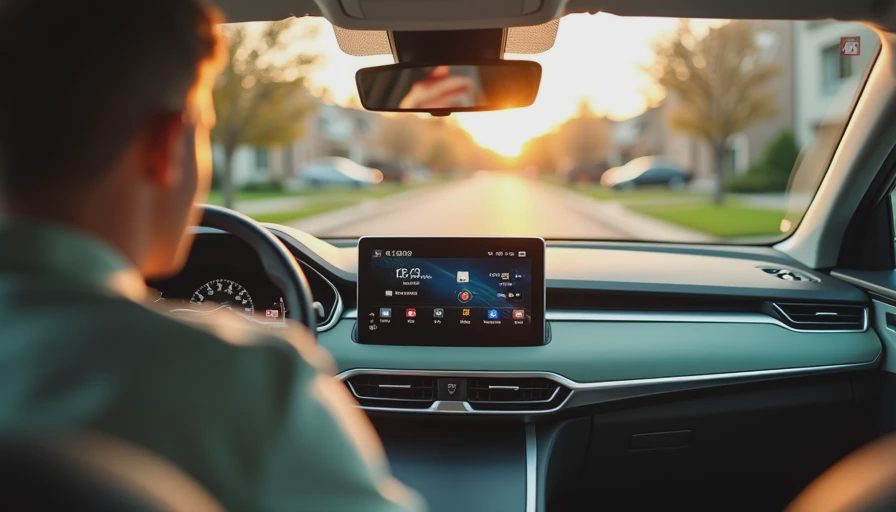
A lot of touchscreen receivers make the same mistake: they try to look advanced, then hide the common stuff. Sony went the other way here. The Sony XAV-AX5000 gives you a clean first screen, obvious source switching, and fast access to audio controls. That sounds basic because it is basic, and basic is often what you want in a cockpit interface. The screen is not the prettiest in the market, but it is readable and direct.
What I appreciate most is the lack of visual clutter. If you have spent time in systems where the UI team keeps adding tiles, widgets, and unnecessary motion, you know how fast that turns into a tap-count problem. Sony kept the path short. The result feels less like a tablet mounted in the dash and more like a tool built to do a job. That is why the Sony XAV-AX5000 still feels current even though newer screens may have fancier graphics.
It is also the kind of receiver that behaves better when you are not in perfect conditions. Cold morning, gloves off and on, Bluetooth reconnecting, coffee in one hand, somebody asking where the charger went: the interface holds up because it does not demand delicate inputs. In plain English, it respects the fact that people do not use car tech in a sterile lab.
Installation is where the short chassis pays off
If you are shopping the Sony XAV-AX5000, the hidden advantage is not just what you see on the screen. It is the shorter chassis behind it. In a lot of dashboards, space is tight once you add the harness, the antenna adapter, and the steering-wheel control interface. A shallow radio body gives the installer more room to route cables without forcing the unit into a stressful bend. That can save time and reduce rattles later.
This is where the difference between a clean install and a cursed one usually shows up. A Metra dash kit, a proper wiring harness, and a PAC or iDatalink interface can make the whole setup feel factory-adjacent instead of hacked together. If the vehicle has a backup camera, the Sony XAV-AX5000 can integrate it cleanly, and if the car already has steering-wheel controls, those can often be retained with the right adapter. None of that is exotic. It just requires a receiver that does not fight the installer.
If you have ever watched a shop wrestle a deep-bodied radio into an awkward opening, you know why this matters. The Sony XAV-AX5000 is friendly to the people doing the work, which usually means fewer shortcuts in your dash. That is a quiet but very real feature.
What daily use feels like in a real car
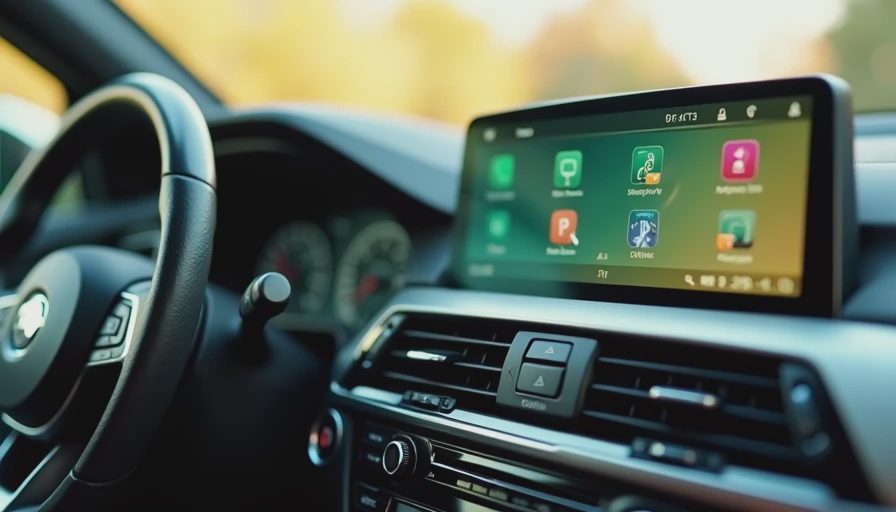
In daily driving, the Sony XAV-AX5000 behaves like a device built by people who understood the cost of distraction. The first thing I notice is boot time. It is not instant, but it is quick enough that you are not sitting in the driveway waiting for the screen to wake up like it owes you money. Once connected, CarPlay and Android Auto feel stable, and audio switching is straightforward.
That matters in family life more than in a spec sheet. If you have a child in the backseat asking for a playlist change, or you are backing out of a driveway in winter with a glove half on, a receiver like this saves friction. The Sony XAV-AX5000 does not ask you to learn a new philosophy every time you drive. It just gets you to podcasts, navigation, and calls without drama. I think that is why a lot of people end up liking it more than they expected.
The sound side is sensible too. I would not buy it if your goal is to build a competition system, but for a normal upgraded daily driver it gives you enough control to make factory speakers or a modest amp setup sound organized. The point is not raw audio bragging rights. The point is clear signal flow and a sane user experience.
Who should skip it and what to buy instead
The Sony XAV-AX5000 is not the right answer for everyone. If you want wireless CarPlay, this is not the one. If you want built-in navigation, this is not the one either. And if your main goal is a giant floating screen with cinematic graphics, you are shopping in the wrong aisle. Sony kept the hardware focused, which is exactly why some buyers will prefer newer models with more modern feature checklists.
But for a driver who values reliability, physical controls, and a cleaner install, that restraint is the selling point. The Sony XAV-AX5000 makes sense in older cars, commuter rigs, and anything that needs to work every morning without a learning curve. It also makes sense for people who are tired of overdesigned infotainment that looks impressive in the showroom and frustrating on a rainy Tuesday.
My short version is this: if you want a screen that behaves like a competent tool, not a hobby project, the Sony XAV-AX5000 still earns its place. Bench-tested. Kid-tested.
Final take
I would not call the Sony XAV-AX5000 exciting, and that is exactly why it still works. It is honest about what it is: a straightforward receiver with wired smartphone integration, sensible controls, and an install-friendly shape. For a lot of drivers, that is the sweet spot. You get the features you actually use every day, and you avoid paying for the extra software theater that tends to age badly.
If you are replacing a tired factory unit and want the least annoying path to CarPlay or Android Auto, this is still a very reasonable buy. The Sony XAV-AX5000 is not the future. It is the present done cleanly, and in car tech, that is rarer than it should be.