Learning how to parallel park is less about having perfect spatial awareness and more about following the same sequence every time. The maneuver feels awkward because you are managing several reference points at once: the curb, the vehicle behind you, your mirrors, steering angle, and sometimes a backup camera displaying a distorted wide-angle view. Once those inputs become a simple routine, the space stops looking impossibly small.
The safest place to learn is an empty parking lot with two cones or boxes standing in for parked vehicles. Practice slowly, with your seat and mirrors adjusted exactly as they are during normal driving. A camera can help, but it should confirm what you see through the windows and mirrors rather than replace those checks.
Set up before the maneuver
Signal early and slow down before you reach the open space. A turn signal tells other drivers what you intend, but it does not give you permission to reverse into traffic. Check the rearview mirror, both side mirrors, and the blind spot over your shoulder. If a cyclist, pedestrian, or approaching vehicle appears, wait.
Pull alongside the vehicle in front of the space until your rear door or rear wheel is roughly level with its rear bumper. Leave about two to three feet of side clearance. This starting position gives the rear of your vehicle room to swing into the space without scraping the other car. If the gap is only slightly longer than your vehicle, do not force it. A few seconds spent finding a larger opening is better than an expensive bumper repair.
Keep your foot on the brake and select reverse only after the area is clear. Modern vehicles often creep backward as soon as the brake is released, so there is no prize for adding throttle. Slow movement gives you more time to interpret what the mirrors are showing.
The three-part steering sequence
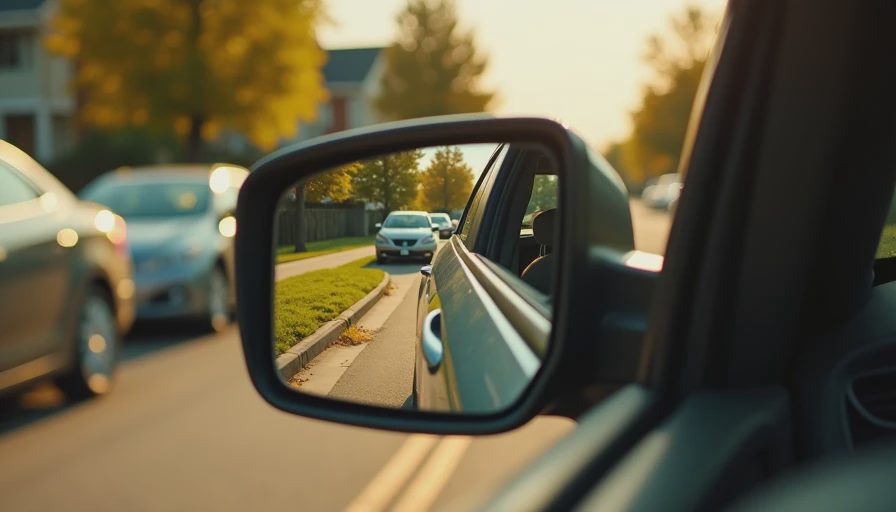
The most useful way to learn how to parallel park is to divide the maneuver into three controlled movements. First, turn the steering wheel toward the curb as you reverse. In a typical sedan, begin with a full or near-full turn once the rear of your vehicle has passed the rear bumper of the car ahead. Watch the curb-side mirror and the front corner of your vehicle. The front end swings away from the curb, so keep checking the space beside you.
Second, straighten the wheel when your vehicle reaches roughly a 45-degree angle to the curb. You should now see the rear vehicle in your side mirror and have the nose of your vehicle clear of the car ahead. Continue reversing slowly while the vehicle moves deeper into the space.
Third, turn the wheel away from the curb to bring the front end into line. Stop when you are parallel and reasonably centered. Then shift to drive, make a small correction if necessary, and leave enough room for nearby vehicles to pull out. The exact steering timing changes with wheelbase and steering ratio, which is why reference points work better than memorizing “one and a half turns.”
How to use mirrors and cameras correctly
A backup camera is excellent for showing distance behind the vehicle, but its guidelines are not a universal parking formula. Some systems show the predicted path based on steering angle; others display fixed lines that do not move. Rain, snow, road grime, and a low curb can also make the image misleading. Clean the lens and learn what the lines mean before relying on them.
Use the curb-side mirror to judge lateral distance, then glance over your shoulder to confirm the camera's picture. You are looking for a consistent gap, not a perfect inch measurement. About six to twelve inches from the curb is a practical target on an ordinary street. Leave extra space if the road has drainage channels, snow buildup, or a sharp curb edge.
The screen should reduce workload, not create tunnel vision. Looking only at the center display is the digital equivalent of staring at one mirror. Good vehicle interfaces provide useful visual information, but no camera sees everything around a moving car.
Common mistakes that make parking harder
One common mistake is starting too far from the vehicle ahead. That forces the rear of your vehicle toward the curb at a steep angle and can leave the front sticking into traffic. Starting too close creates the opposite problem: there is not enough room for the front end to swing safely.
Another mistake is turning the wheel while moving too quickly. Speed makes small errors become large ones, and it gives you less time to stop if a pedestrian enters the area. Keep the vehicle at walking pace or slower. If the angle looks wrong, stop, shift to drive, and pull forward for another correction. Repositioning is a normal part of how to parallel park, not evidence that you failed.
Do not use the car ahead as your only visual reference. Check the rear vehicle, curb, front corner, and surrounding traffic. Also remember that a long SUV, a short hatchback, and a compact sedan each require different timing. The same steering cue will not produce the same result in every vehicle.
A practical practice plan
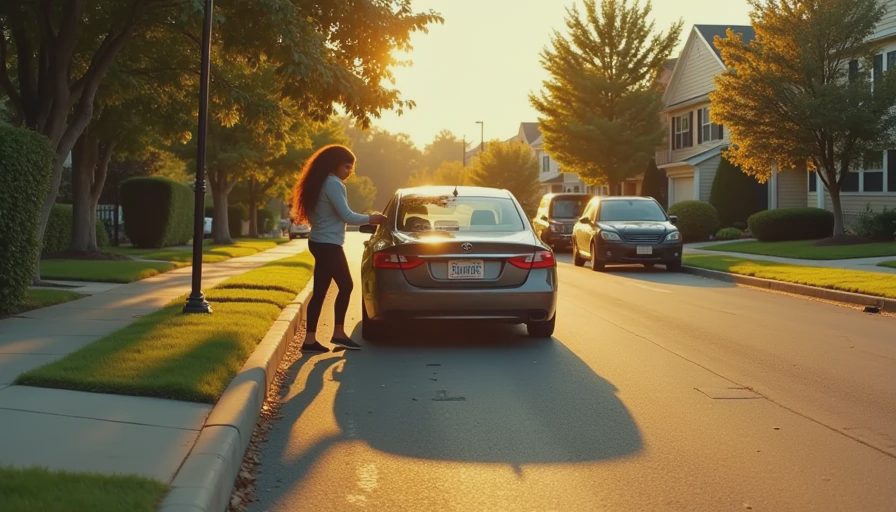
To practice how to parallel park, set two cones farther apart than a typical street space at first. Use an opening about one and a half times the length of your vehicle. Complete the maneuver five times without worrying about speed. Focus on starting position, curb-side mirror checks, and stopping before contact.
Next, narrow the space gradually. Move the cones closer by a foot or two, and repeat the sequence. Practice from both directions if the street layout allows it. Try the exercise in daylight first, then in low light with clean mirrors. A passenger can watch for obstacles, but that person should give simple instructions rather than grabbing the wheel or creating last-second confusion.
If your vehicle has parking sensors, test how their beeps change as you approach an object. Some systems provide a steady tone only when the gap is already very small. Treat the alert as a warning, not as permission to continue. Technology can help you calibrate your judgment, but the goal is to understand the vehicle without needing a screen.
Passing the real-world test
On an actual street, choose an opening that gives you room to correct. Signal before stopping, check traffic repeatedly, and keep pedestrians and cyclists in view. If another driver waits behind you, do not let impatience change your process. They can go around when it is safe, or they can wait a few seconds.
A successful park does not need to be elegant on the first attempt. It needs to be controlled, legal, and considerate of everyone sharing the road. When you understand how to parallel park, you can use mirrors, cameras, and steering inputs as separate pieces of information instead of treating the dashboard screen as an instruction manual.
The best interface is the one that supports your judgment without demanding all of your attention. Bench-tested. Kid-tested. Practice the sequence in a quiet lot, then take it to a forgiving street before attempting a tight downtown space. With repetition, the maneuver becomes another predictable driving task rather than a public performance.