A subwoofer can turn a flat factory audio system into something you feel in your chest, but the installation is only as good as the connection between the amplifier and the speaker. Choosing subwoofer speaker wire is not glamorous, yet it is one of those small decisions that separates a clean upgrade from a trunk full of intermittent rattles and mystery distortion. The good news is that the engineering is straightforward once you know what matters.
What subwoofer speaker wire actually does
Subwoofer speaker wire carries the amplified audio signal from an external amplifier to the subwoofer. That is different from the RCA cable or line-level connection running from a receiver to an amplifier. RCA cables carry a relatively weak signal. Speaker wire carries the amplifier's higher-current output, so it needs suitable conductors, insulation, and connectors.
The wire does not create bass by itself. It cannot turn a 300-watt amplifier into a 1,000-watt system, and expensive cable will not fix an incorrectly set crossover. Its job is simpler: deliver the amplifier's output with as little resistance, damage, or unwanted contact as possible. Good subwoofer speaker wire is flexible enough to route, thick enough for the run, and properly secured at every connection.
For most car installations, stranded copper wire is the practical choice. Strands tolerate vibration and repeated movement better than solid household wire. Oxygen-free copper is common and can be a reasonable purchase, while copper-clad aluminum is less expensive but usually needs a larger gauge to offer similar electrical performance. The label matters less than the conductor size and honest construction.
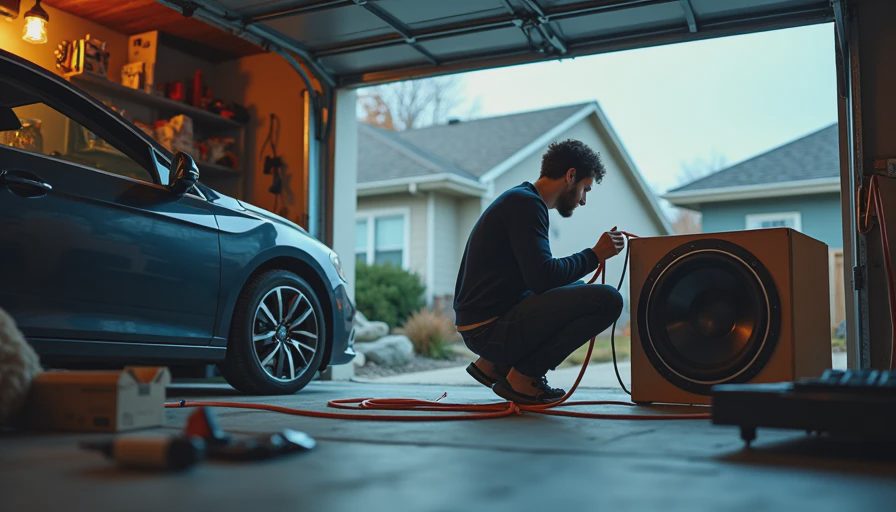
Choosing the correct wire gauge
Gauge describes conductor thickness, and lower numbers mean thicker wire. A short run to a modest subwoofer often works well with 14-gauge or 12-gauge wire. For higher-power systems, longer paths, or a pair of subwoofers, 10-gauge is a safer starting point. The goal is to keep resistance low enough that the amplifier can control the woofer without wasting meaningful power as heat.
As a simple example, a 200-watt amplifier connected to a single subwoofer in the cargo area usually does not need enormous cable. A 12-gauge run under about 15 feet is typically sensible. A 600-watt setup with a long route through a three-row SUV deserves 10-gauge, particularly if the subwoofer impedance is low. These are practical guidelines, not permission to ignore the amplifier maker's specifications.
When comparing subwoofer speaker wire, look for the actual American Wire Gauge size rather than marketing language such as heavy duty or competition grade. A transparent jacket, red-and-black jacket, or premium-looking packaging does not tell you the conductor's capacity. Kicker, JL Audio, Stinger, and Scosche all sell automotive audio wire in useful sizes, but a reputable generic cable can work just as well for a normal installation.
Copper, aluminum, and cable length
Copper conducts electricity better than aluminum, which is why copper-clad aluminum cable is usually sold at a lower price. That does not make aluminum unusable. It means you should account for its higher resistance by choosing a thicker cable and avoiding unnecessarily long runs. If two products cost nearly the same, full copper is the easier choice because its specifications are simpler to interpret.
Measure the complete route before buying. Include the distance from the amplifier to the enclosure, the turns around trim panels, and enough slack to remove the enclosure later. A six-foot estimate can become a ten-foot route once the cable follows the cabin's existing channels. Buying a little extra is cheaper than joining two short pieces behind a panel.
Subwoofer speaker wire should remain separate from power cable whenever possible. Power wiring can introduce noise into nearby signal cables, although the speaker output itself is less vulnerable than a low-level RCA line. Do not run cable across sharp metal edges, beneath seat rails where it can be crushed, or next to hot components. Automotive interiors move, flex, and collect spilled drinks, so routing is part of the electrical design.
Terminals and connections that stay reliable
A bare wire twisted around a terminal may produce sound during the first test and fail after several months of vibration. Strip only the insulation needed for the terminal, twist the strands neatly, and use a crimped ferrule, spade terminal, or banana-style connector if the amplifier and enclosure support it. A solid mechanical connection matters more than a shiny accessory.
Check polarity before closing the panels. Connect the amplifier's positive output to the subwoofer's positive terminal and negative to negative. Reversed polarity does not usually damage the speaker, but it can make bass sound weak when the subwoofer and factory speakers cancel each other across overlapping frequencies. If the bass seems louder when the enclosure is temporarily out of phase, investigate wiring and system settings rather than assuming the speaker is defective.
Leave enough slack to service the system without pulling on the terminals. I prefer a short service loop near the amplifier and another near the enclosure. That small detail prevents a future trim-panel removal from turning into a tug-of-war with a connector.
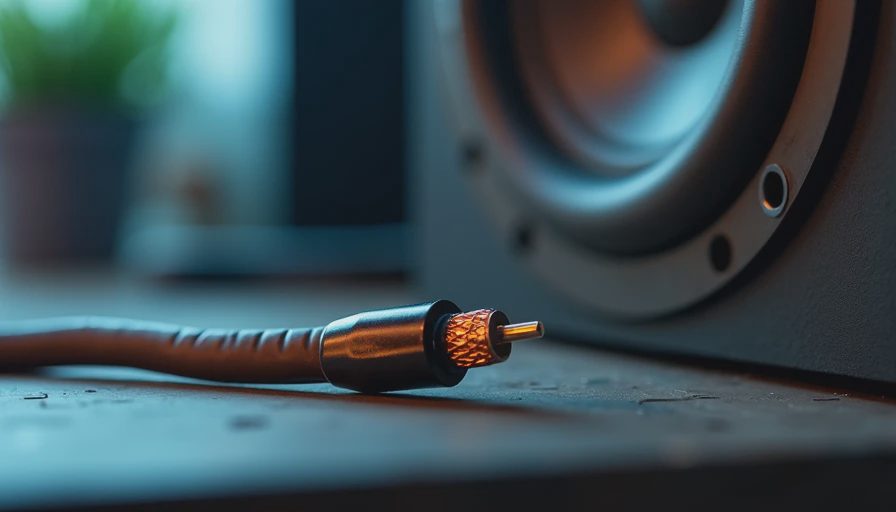
Installation mistakes that cause disappointing bass
The most common mistake is using the same cable size for every system without considering power and distance. Another is buying a thick-looking cable with very little copper inside. The third is treating wire as an afterthought while spending heavily on an enclosure or amplifier. A $25 cable installed cleanly can outperform a $100 cable that is pinched, loose, or too small for the run.
Do not confuse subwoofer speaker wire with amplifier power cable. Power cable connects the battery to the amplifier and requires its own fuse near the battery. Speaker cable connects amplifier outputs to the subwoofer. They have different purposes and should not be substituted. Also avoid household extension cord for a permanent automotive installation; its jacket and flexibility are not designed for this environment.
Before reassembling the interior, play a familiar track at low volume and listen for intermittent sound, buzzing, or a woofer that moves opposite to the main speakers. Increase volume gradually, then touch the terminals after a short test. Warmth at the amplifier is normal, but a loose connection, damaged strand, or visibly hot wire deserves immediate attention.
A practical buying recommendation
For a typical single-subwoofer family SUV, I would buy 12-gauge stranded copper subwoofer speaker wire, measure a route of roughly 12 to 15 feet, and choose a product with a flexible automotive jacket. For a powerful dual-subwoofer setup, 10-gauge is a reasonable upgrade. Spend the remaining budget on proper crimp terminals, cable loom, clips, and time spent routing the installation cleanly.
The right subwoofer speaker wire is not a magic performance upgrade. It is infrastructure, like a well-designed software interface: invisible when it works and immediately frustrating when it does not. Match the gauge to the amplifier, use full copper when the price difference is modest, protect the run from abrasion, and verify polarity before hiding everything behind trim.
That approach delivers what most drivers actually want: deep bass that stays consistent over bumps, through Michigan winter temperature swings, and during the inevitable backseat snack emergency. Bench-tested. Kid-tested.